Author: anagrabovic18

  • Perspectives

    Perspectives

    I have said it before, but autumn (aka. ‘fall’) is a very important watershed moment for me every year. I can’t say it is my favourite season, which is mainly due to the fact that I am not really into grey skies and rain, but there is something undeniably magical about autumn that definitely makes me love it much more than winter or spring.  

    Autumn kindles so much desire for change in me, that sometimes I feel I just want to start all over again; in everything. I feel like throwing out all my clothes because they no longer ‘spark joy’, as well as wishing I could move to a different country, find a new job or at least move house. Admittedly, none of the above is realstic (and probably not even healthy or remotely sustainable), but at least I really feel like going for it, which, on a much smaller scale really makes me implement some of the things I have been reminiscing about throughout summer or procrastinating over since last year. 

    I am the kind of person that observes and takes in a lot of outside influences, ideas and thoughts without really doing anything with them for a very long time until one day I wake up and I had enough. I need change. And ususally, this happens in September. 

    People in the office are back from holidays and I look at them wondering why they still wear the same clothes and hair styles than 5+ years ago. (OK, let me explain my judgy self here for a second: I am talking clinging on to the past, as in, the same hairstyle they sported in their early 20s when now, in their 40s, faces aren’t as youthful and hair growth isn’t as bountiful anymore.) Why do they keep piling on stuff onto their desks without decluttering it first? Why are they adding more folders to the shelves instead of emptying those they no longer need? 

    But then I get back to reality and remind myself that other people aren’t my business. I am my business and change starts with me, right here and right now. 

    Shifting your perspective is skill I believe not many people possess or master, myself included. At least I am aware of it, even if far from proficient in it. I am trying, I am working on it. And travelling is one of the biggest catalysts for me to nurture my ability to change perspective.

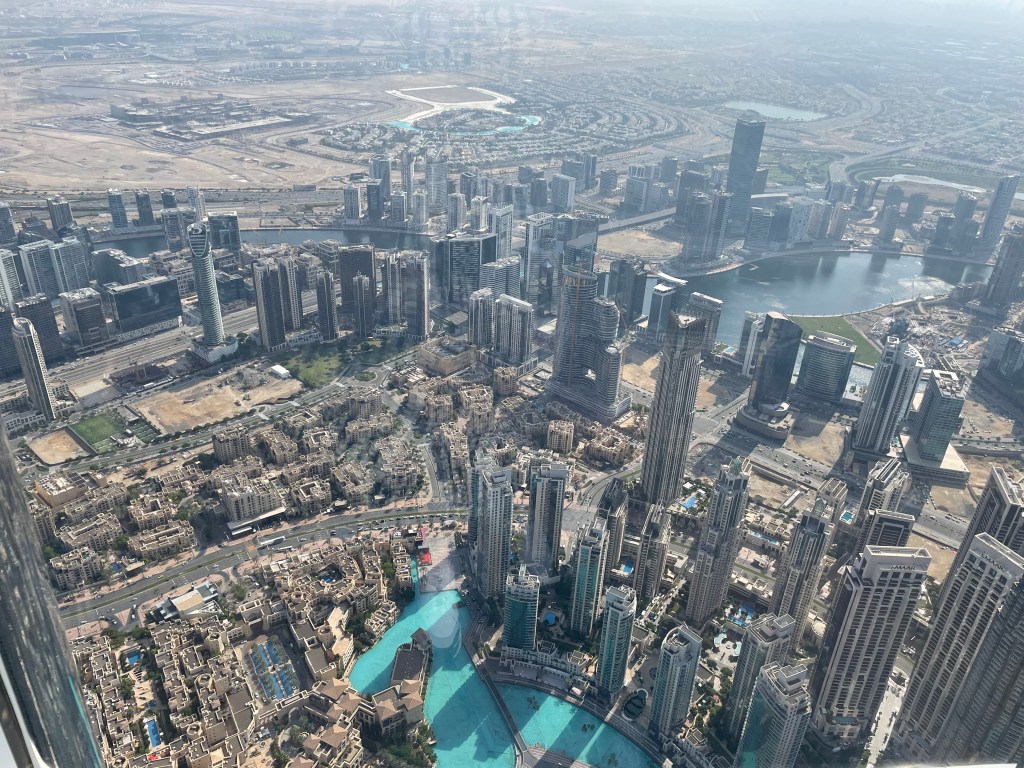
    View from Burj Khalifa 147th floor

    I have realized years ago that simply going on a weekend trip helped me restore balance in my life and thoughts (I am a libra in case you wondered) and had a disproportionally large positive effect on my mental well-being. When I stay too long in the same place, routine and surroundings, my mood flattens and I live on auto-pilot, getting things done, day in day out, without much room and pause for admiring the beauty of life. When I am in the situation, I do not even realize it, but as soon as I get out, go somewhere else, see something else and change my perspective, I realize it. I heal, I recharge, I am able to look at what’s going on in my daily life from that ‘outside perspective’ I otherwise lack. In a way, I crave the outside input, and I have learned to give in to that craving, so I travel.

    When I return, I am full of new ideas and energy and I know exactly what I no longer want and what I want to change. 

    When I go too long without travel, I am keeping too much to myself, to my inner (unhealthy) comfortzone. I need that impulse and social cue to get me out of it that only travel can give me.

    I miss my close friends who live abroad and want to go see them. I miss a big city and people-watching. I miss being surrounded by culture and different foods and smells and beautiful things. 

    I just wish travelling was more affordable. It feels like hotel prices skyrocketed ever since the pandemic bid us farewell. And if you followed my blog from its inception, you will have understood already that my travelling habits have become more demanding (and perhaps entitled) and cutting corners is still unfortunately the order of the day, because I find it increasingly impossible to compromise on effortlessness and style and it wouldn’t be possible for me to travel as much and as comfortably if I wouldn’t cut my trips shorter or safe on various extras I would actually like very much. 

    Right now, I am contemplating cutting a huge corner and possibly just go on a day trip to a place not too far away. But the ever overthinking libra that I am, I just don’t know whether it will be worth it. Will it be comfortable I ask myself? And deep down I know the answer will be ‘no’… But I am still thinking about it. I haven’t decided yet. Maybe it will be just comfortable enough to spark that change of perspective I really need. 

  • Culture, history and a side of hummus, please!

    Culture, history and a side of hummus, please!

    I recently visited the Hungarian capital Budapest. Many years ago, when I was still a student, I already heard the tales of fellow students going to visit the bath houses in Budapest and how much they loved the special vibe of this Eastern European city. I was intrigued, but never really found a ‘reason’ to visit. Recently, the recurring, subtle suggestions from the Instagram algorithm probably planted the idea of visiting Budapest more firmly into my mind. It just looked so beautiful with its magnificent architecture and picture-perfect bagels that kept popping up on my feed. 
    Let’s get the bagel disappointment out of the way first: I just wasn’t impressed. Probably I did not know where to go, but the Best Bagel Basilica just wasn’t it for me. They were not bad but did not live up to my memories of sumptuous, soft Jerusalem bagels. 

    Earlier this year, I decided that at least once a year, I should go to a place I have never been to before, and so a Budapest meet-up with my Austrian friend seemed like a fantastic idea. There is a direct train from Vienna, as well as good flight connections to many capitals around the world.  

    Budapest has way too much to see for a weekend. At the same time, I am not sure I would ever recommend a city trip for more than 3 days. Maybe it is just one of those places that you have to visit multiple times over the years to see and experience everything. 

    Besides catching up about our lives, we really wanted to take it easy on this trip and kept walking to reasonable limits. Let’s just say, if I am on my own, I walk at least twice as much. But Budapest was great in terms of Uber-ing everywhere. Affordable, clean, and – for a visually impaired person like me – easy to find and identify the specific car that was picking us up, as all Ubers are at the same time yellow cabs and drivers are very patient. 

    I found the Hungarian people very friendly and kind in a pleasant and somewhat reserved kind of way and everybody had an excellent command of English, and/or another language I spoke. One market vendor sold me yet another bag of paprika just because he so kindly spoke to me in Serbian (without being sleazy). Just pure kindness (and being a good salesman, of course!). I did regret having bought the first batch at a somewhat more touristy stall before I came across his. So, don’t be like me; check before you buy and who knows, you might come across someone who speaks your language and gifts you a smile!

    Tourist in front of Hungarian Parliament

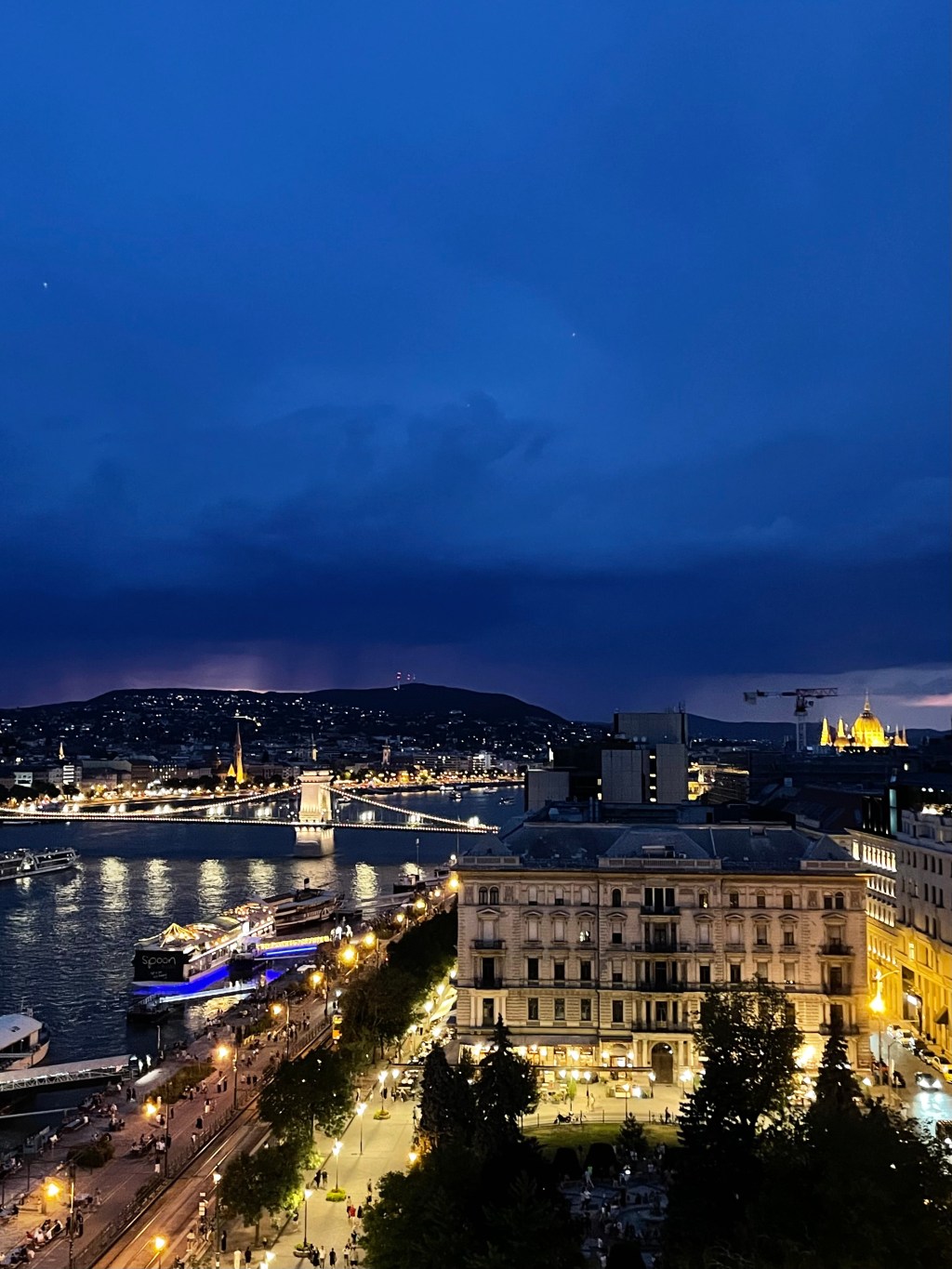
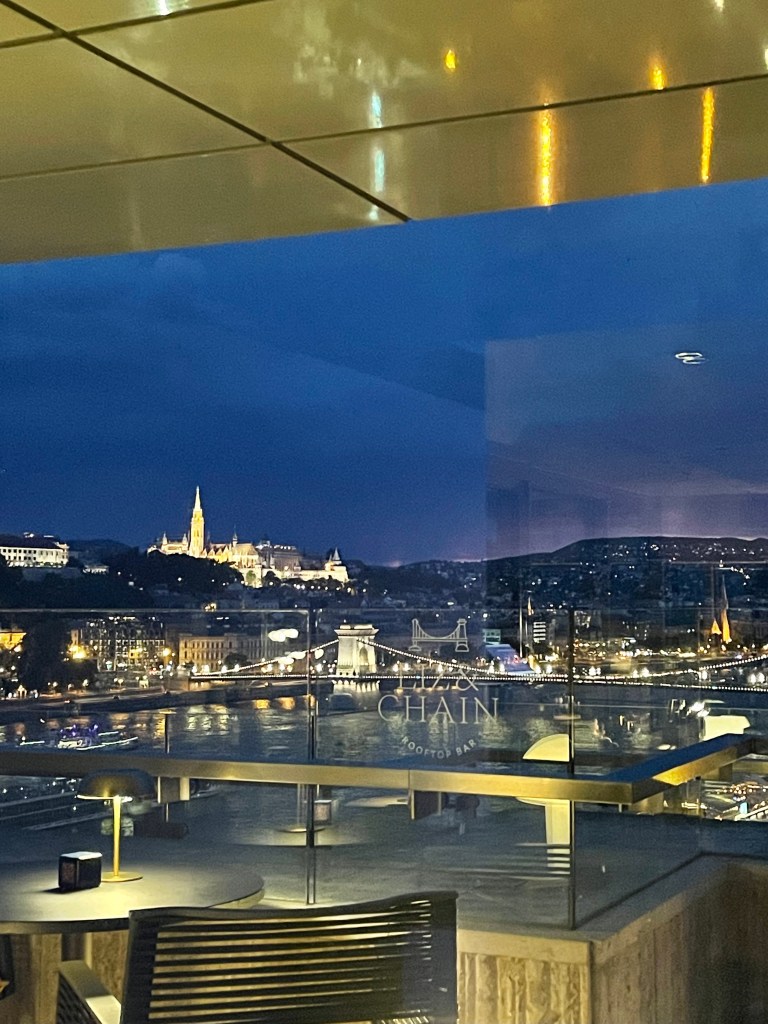
    After a stroll through the market hall, we wandered along the bank of the Danube to take pictures of the Liberty and Chain bridges and the historical tram until we more or less reached the stunning Hungarian parliament. 

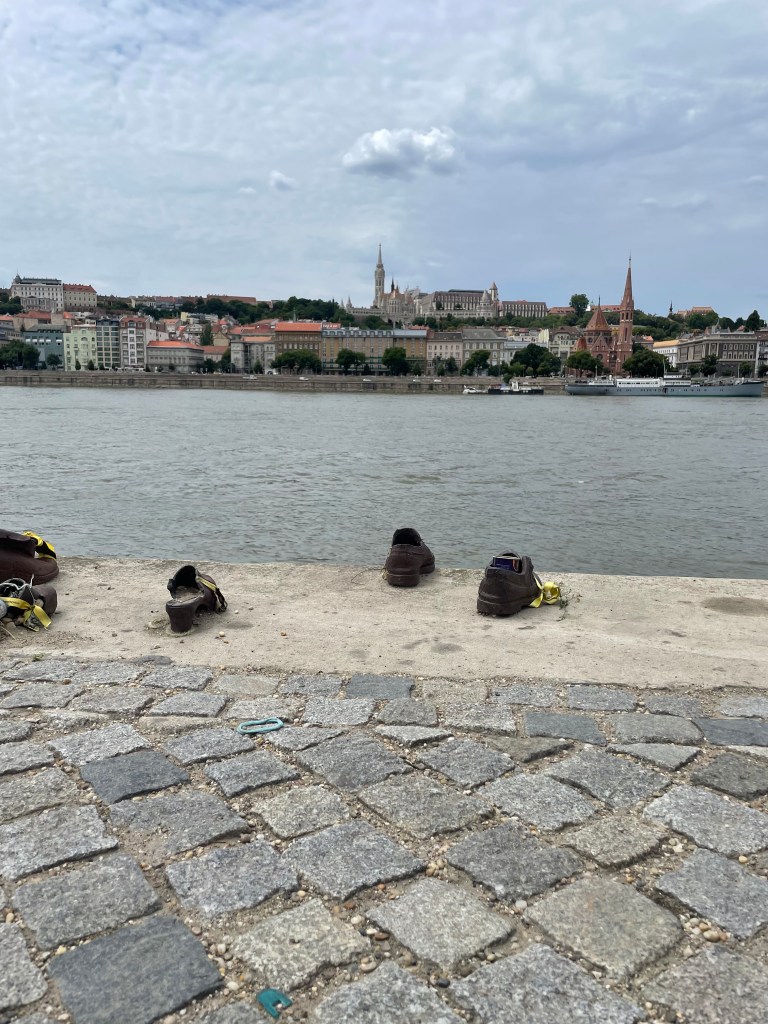
    Not far from parliament by the riverbank lies the very harrowing monument of the Shoes by the Danube bank. I have visited a fair share of holocaust memorial sites in my life, but this one really touched me very much on a very deep level.

    The shoes are so vividly crafted that you can imagine the people who wore them before they were so cruelly killed at the very tail end of the war.

    Shoes by the Danube bank memorial, Budapest

    This memorial site was not only very moving but, of course, deeply depressing in its own right; but we must never forget history and for what it is worth, I think we must never avoid this uncomfortable feeling of being reminded of what humanity is capable of.

    I do not want my blog to drag you down, far from it. I started it to distract, to share positive and funny things, to give tips on travel based on things I got right or got wrong during almost two decades of mainly solo travel. But I don’t just travel for shopping and eating, surprising as it may seem. I travel to broaden my horizon and become richer in experiences and understanding of other cultures and lifestyles. Sometimes through shopping, always through food, and other times through history and art.

    Let’s just say, no one was shopping on this trip, and besides some of the designer staples like Louis Vuitton and Max Mara we walked past on our evening stroll near the opera house, I wouldn’t even be able to tell you where the main shopping district is or what kind of shops they had. 

    This time around, it was truly just about culture, history, and architecture.

    What I also did not know, for example, is that Budapest has the third largest synagogue in the world, the Dohany Street Synagogue with its own very unique history and architecture. It is not only a stunningly beautiful building in itself, but it has a very fascinating history.

    Dohany Street Synagogue, Budapest

    I strongly recommend that you take the guided tour to really understand this building and the particularities of Jewish life in Hungary. Our guide was a very funny man who steered clear of all politics, which I appreciated very much. I really did learn a lot about Jewish history and Hungarian history just by taking the tour.

    If you decide to go, just please make sure you are covered (no shorts or sleeveless tops etc.) or else will have to wear the not so chic light blue cover-up raincoat type of thing. Just don’t. And don’t show up on  Shabbat (i.e. Saturday) or holy Jewish holidays, in other words, check and plan ahead to avoid disappointment.

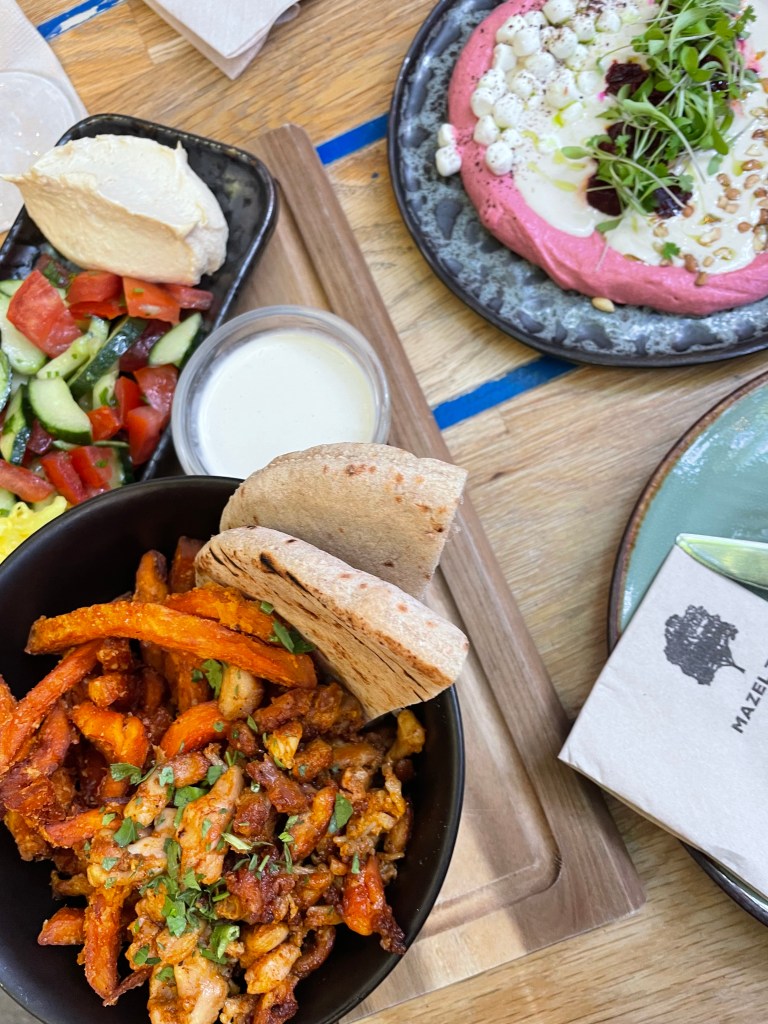
    To end our day of cultural immersion, we went for dinner and drinks at Mazel Tov in the Jewish district (they are even open on Shabbat), where the food was very nice and the local wine recommendation great.

    Colourful Meze

    All in all, the Hungarians appear to appreciate their drinks, with cocktails and copious amounts of alcohol on display on every corner of the city it seemed – our hotel served sparkling wine as a breakfast staple – which isn’t really my cup of tea, but I do not mind trying a glass of local wine with a dinner. I believe Mazel Tov is a great place for anyone who misses a bit of Tel Aviv style boho atmosphere and generally enjoys a relaxed place for food and drink. I can warmly recommend the beetroot hummus and the local rosé that is apparently almost always sold out and whose name I cannot remember (or pronounce) for the life of me. It will, of course, also be more fun if you go with a group of people and share different dishes mezze style. 

    To be continued (because Budapest has a lot to offer!)

  • La rentrée – The Return

    La rentrée – The Return

    La rentrée, literally meaning ‘the return’, or as the British would call this period: “Back to School” isn’t only a slogan accompanying offers of school uniforms and stationery in the shops. No, it is a feeling. The return to normal, everyday life that follows the re-set during your summer vacation is a magical time of the year and, in my book, much more important than January resolutions. For me, la rentrée is the real deal; the fresh start, the enthusiastic outlook on what there is to come and above all, the time to plan your next trip. 

    Traditionally, this is my favourite time to plan an autumn city break to Paris or Milan and think about some new wardrobe staples I might want to look out for during these trips. The weather will still be good in most European cities and the days are still relatively long until the change to wintertime in late October. In fact, if you love sightseeing and to culturally immerse yourself in museums and exhibitions, I believe autumn is the perfect time to plan a visit to Paris. While Paris is always a good idea, my favourite time to visit the French capital is between September and mid-October. Just look out for the fashion week and absolutely avoid that time, as hotel prices will sky-rocket and traffic will become unbearable. 

    Autumn in Paris will always be magical. The parks will show the first autumn hues, the air will be crisp but days are still sunny and pleasant for the most part. You can start wearing layers and trench coats and shoes that have been hiding in the transitional department of your wardrobe for a while. For me, autumn in Paris, is also synonymous with shopping. I don’t know why, but I tend to be more interested in shopping that time of the year as opposed to spring or summer. Maybe that has to do with the fact that living in the Netherlands requires an autumn wardrobe all year round, or simply because la rentrée makes me very excited about changing things up and exploring new trends, including clothes and shoes. Don’t get me wrong, it is not a shopping spree that I am talking about but rather the selective sampling of one or two good pieces I can wear for several years to come.

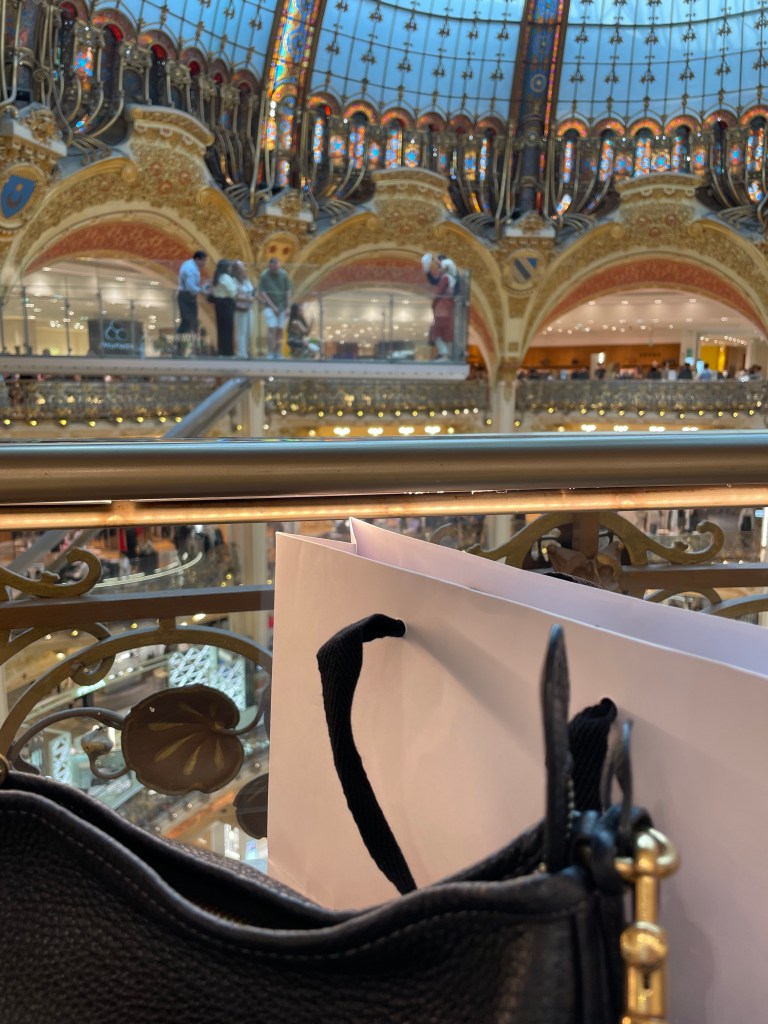
    Galleries LaFayette Paris

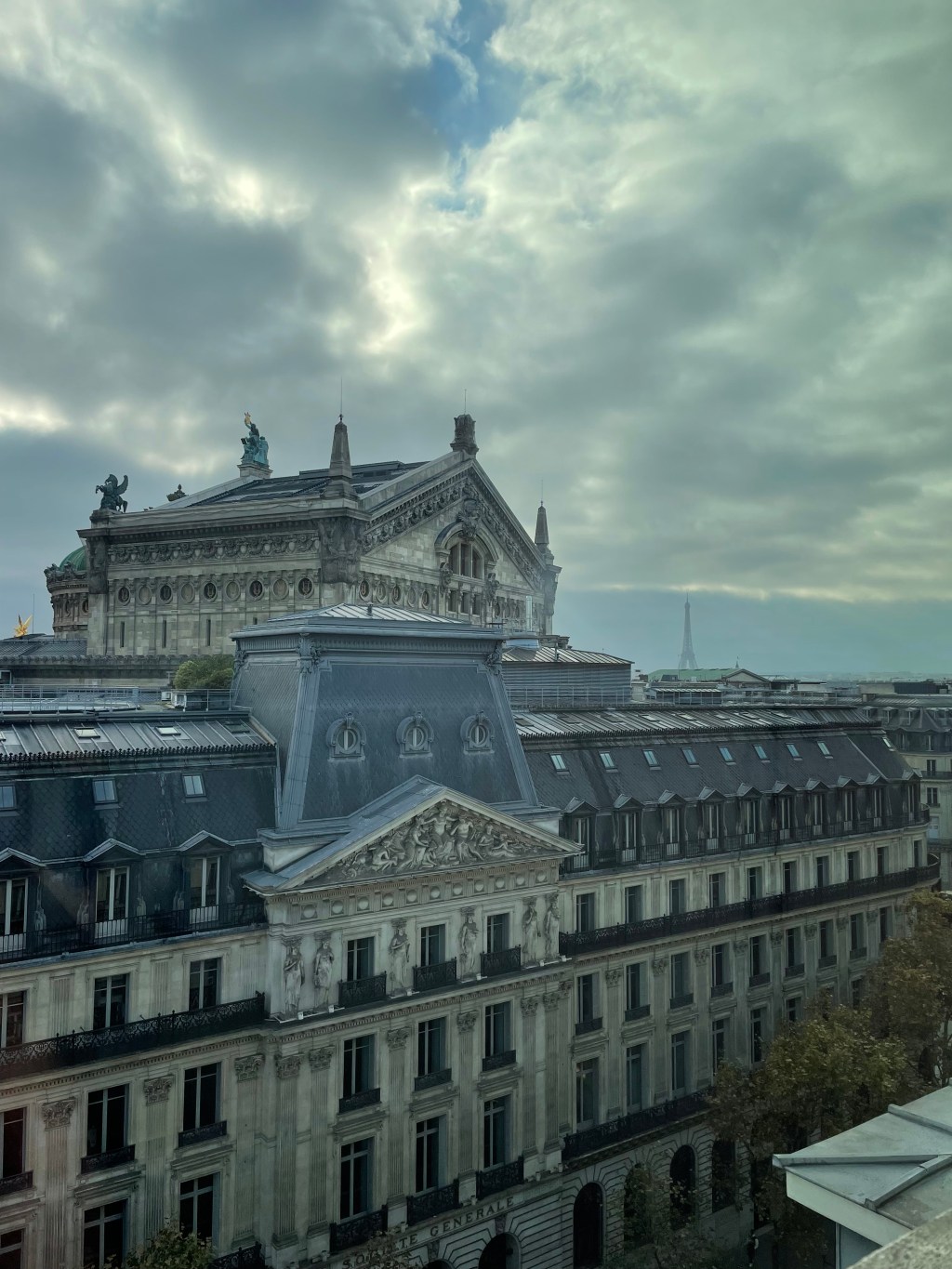
    My favourite shopping spot of all times are the Galleries La Fayette in Paris, as well as the Printemps department store next door. If you go later in the day, I recommend stopping for an apéritif on the rooftop of Printemps homme for magnificent sunset views of the Eiffel tower and the Opéra. If you are more into shopping skin care and beauty products and prefer calmer surroundings, I would recommend La Samaritaine on the river banks next to the Pont Neuf close to Notre Dame or French Pharmacies.

    My absolute favourite French Pharmacy is the Pharmacie Paris Eiffel Commerce in the 15th arrondissement. It is beautiful, very spacious, well-stocked and not as crowded as anything you would find around the Opéra area.

    Well, you can’t just be shopping and eating cake either. And, of course, there will be rainy days during this time of year and the best way to not get disappointed about that is to strategically plan your museum days. For the Louvre and Musée d’Orsay, you absolutely should book your tickets in advance. In fact, you will have to select a time slot in order to skip the queue and even then, there will be a considerable queue for the time slot you booked; however, this will go fast, and you won’t have to queue more than 20 minutes at most. 

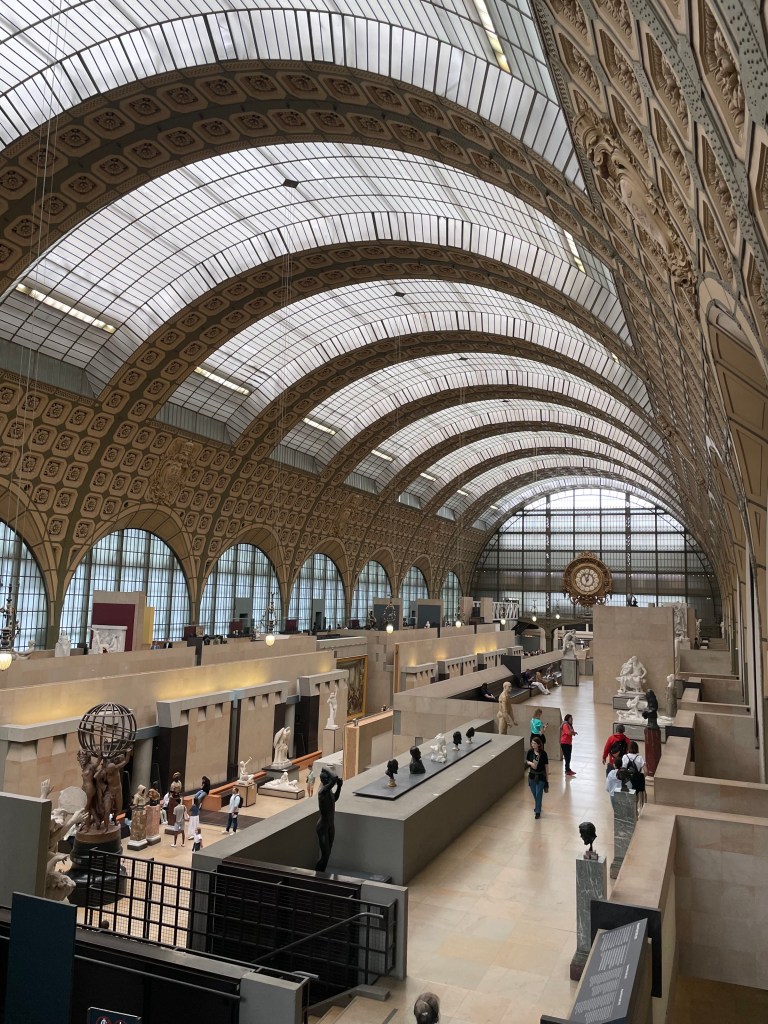
    Musee d'Orsay Paris

    The first Sunday of the month, admission is free at the Musée d’Orsay, however, you need to make a reservation, so just keep that in mind, but free access sounds pretty sweet to me! After the museum visit, you can stroll through the Jardin des Tuileries, grab a coffee and pastry at some of my favourite places (check out my blog post of 22 June 2025 below for recommendations) and enjoy the beauty of this glorious city in style.

    After the museum visit, you can stroll through the Jardin des Tuileries, grab a coffee and pastry at some of my favourite places (check out my blog post of 22 June 2025 below for recommendations) and enjoy the beauty of this glorious city in style. The Jardin du Palais Royal is not too far either, and there you can grab a coffee and chill by the fountain in the fading afternoon sun. 

    But la rentrée is so much more than just a city break and a cardigan or pair of boots. If for your children it is the time of year to deal with new teachers and reuniting with their friends, this time of year should really direct you towards exploring new things and ways of thinking. I hope you were able to take some rest in the weeks of July or August, and I equally hope that this rest enabled you to reflect and recharge and get inspired for the season that lies ahead. Maybe you made the resolution to go back to the gym, to start Pilates or hiking or to revive a rusty running routine. Maybe you decided that after the holidays you would start preparing meals to bring to the office; maybe you just got bored of the clothes you have been wearing for ever and think it is time to change; whatever it is, take ‘the return’ to normal everyday life as a chance for a new beginning. Don’t wait for January. If your kids can do it, so can you.

    I really think that the moment real life resumes after the summer break is the time to dive deeper into examining the year that lies behind and to strategize on improving one or two things as we go ahead. I know this book has been widely hyped, and you may just be the person who is put off by such over-hyping of things but hear me out.

    Atomic habits book on a hotel bed

    Atomic Habits by James Clear is a book I very much enjoyed reading over the span of a few months starting last rentrée (apart from the charts and graphs. They freak me out). In my opinion, it is not a book you can read in one go and put aside. I think it is more of a companion kind of book that guides you through a couple of weeks, chapter by chapter if you read it attentively and internalize what James Clear is sharing with you.

    While I can’t really say that it was revolutionary or anything like that – mainly, because I have always been a very habitual and disciplined person – I think that it helped me reaffirm the significance I have always placed on my routines and habits and I therefore found it very interesting and inspiring to pick up one or two new habits starting that time of the year.

    La rentrée is arguably one of my favourite times of the year and writing this post, I immediately want to get onto that train and go to Paris myself again. I wish I could. But truth be told, Paris isn’t much fun on a budget and I literally just came back from my summer vacation. Let’s give it a bit of time and space so that the next trip will be as wonderful as the ones I did before. The summer season really needs to close in style before I am ready to pack up again and make that trip to the beautiful city of light. Or somewhere else for a change; who knows?

  • When tulips are no longer in season

    When tulips are no longer in season

    The best time to visit The Netherlands – and I think many people would agree with me on this – is undoubtedly mid-March to mid-April when tulips are in season in this part of the world. However, I would argue that your chances for good weather increase sharply when you delay your trip until about June to August.

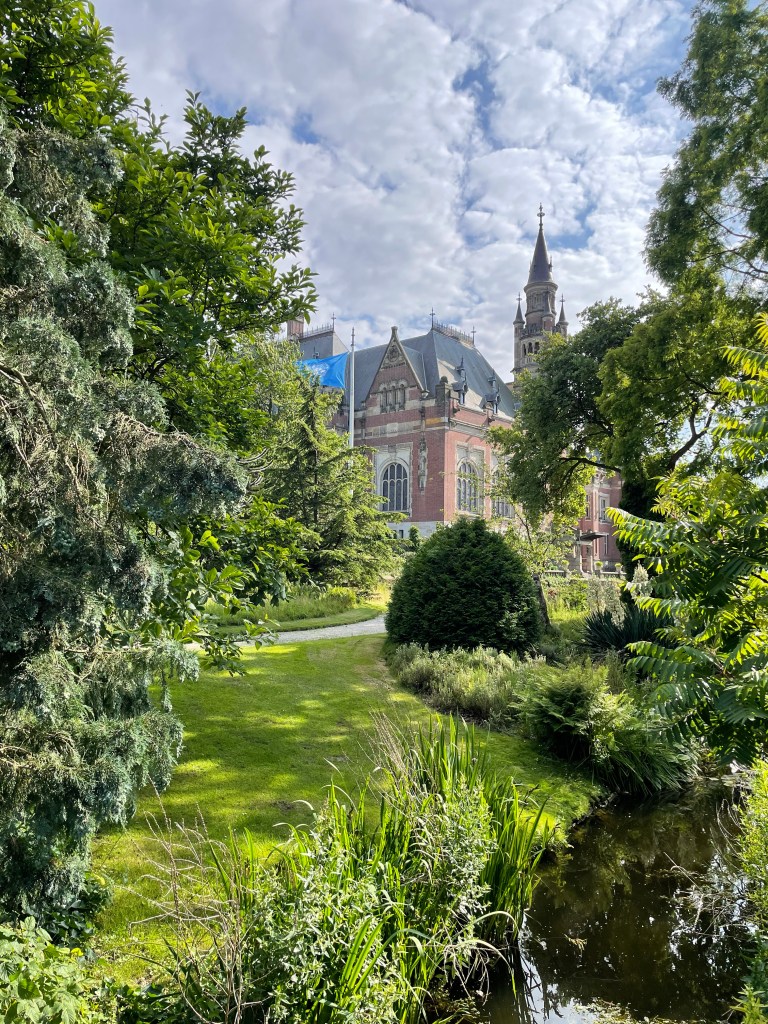
    The tiny country of The netherlands actually has a lot to offer in terms of picturesque scenery and grand museums and today I will focus on The Hague, also known and the city of peace and justice, with the imposing building of the Peace Palace serving as the seat of the International Court of Justice. 

    Peace Palace in The Hague

    While The Hague does not have many canals and therefore distinguishes itself somewhat from other Dutch towns, such as Delft or Utrecht you may have already seen on instagram, it houses the beautiful building of the Dutch parliament right next to the Mauritshuis in the very heart of the city. For connaisseurs of the Old Masters and their paintings, you may have actually already seen the Buitenhof and hence the Dutch parliament buildings on maginificent paintings exhibited in Madrid’s Prado museum in Spain.

    The Mauritshuis on the other hand is a relatively small museum and displays the maginificent painting of the girl with the pearl earring by Johannes Vermeer as well as works of Rubens and Rembrandt. You are well advised to purchase tickets in advance, as you will have to select a time slot for your visit. However, this museum is not as frquented as, for example, the van Gogh museum in Amsterdam and it should suffice to order your tickets a few days in advance. 

    Bike in front of the Mauritshuis

    I don’t know about you, but I always feel mentally exhausted after a visit to the museum and definitely need to distract with the simple pleasures of life, such as a beautiful walk and or a cup of coffee. If the weather permits, you should absolutely enjoy Dutch coffee culture and join the locals in the numerous cafés on the Plaatsacross or along the Denneweg nearby, which, among summer; the first houses several restaurants and higher end clothing boutiques and spas.  

    Behind the Plaats, you’ll get to the Noordeinde that houses the city’s high-end stores as well as more cafésand hipster shops. If you like matcha tea for instance, I can recommend the Hug the Tea in Papestraat for nice matcha; unfortunately, they do have the most uncomfortable chairs in the world, which means, you might prefer to get a takeaway instead.

    When it comes to food, I think Denneweg is a better choice; Vincenzo’s offers great pizza and Walter Benedictis a very unique blend of Dutch and international cuisine. It is an all-day-place, and whether you just want to people watch while having a cappuccino (even in the afternoon, because this is not Italy and no one will care) or indulge on local oysters or a simple burger, you are at the right place. The menu isn’t extensive, but that is usually a good sign. There are a number of other restaurants on this street, but I haven’t tried them, so I do not want to recommend anything I haven’t tried.

    From Denneweg, you can also continue on to Frederikstraat where you will find more restaurants, cafés and a few interior design shops. I can particularly recommend the Barista caféwhich has a cool vibe, and is frequented by a wide range of people of all ages, which I like very much. I am not really into places that are so niche that they only attract one kind of clientele; I am not sure whether that makes sense, but this is my opinion. Barista café is also a great choice for rainy days because you can sit for a long time and just enjoy the vibe on one of their cozy armchairs or sofas.

    Cozy cafe in dimmed light

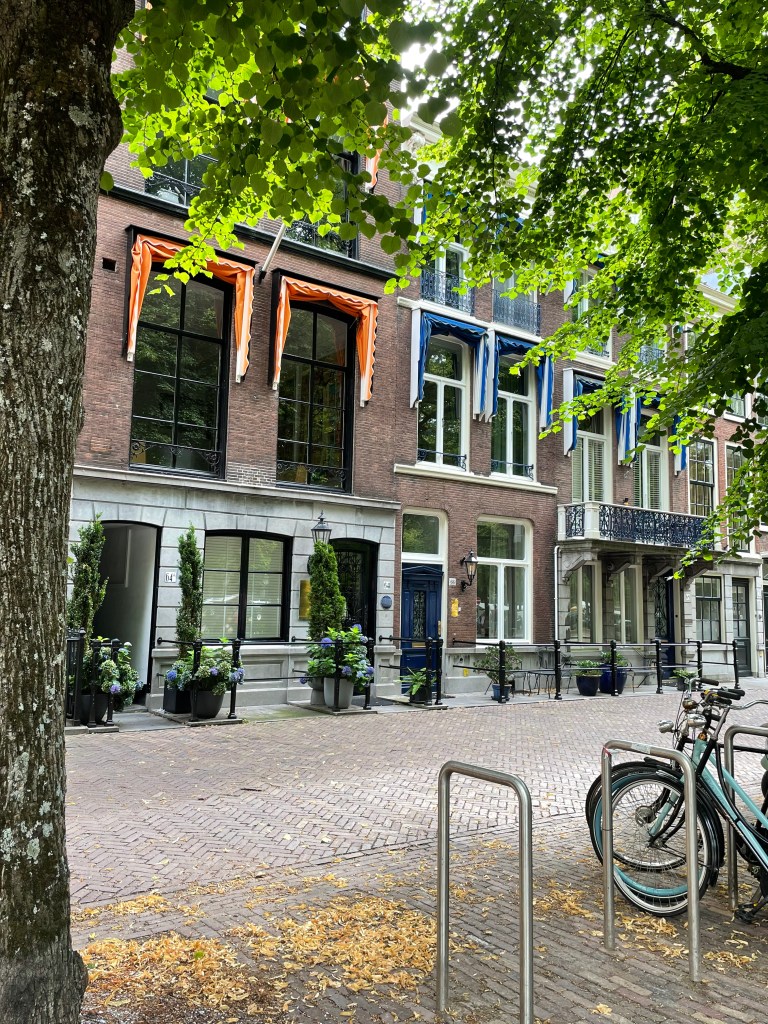
    I don’t know whether you are anything like me, but I really love just walking around the tiny streets and beautiful old houses to take in that very unique Dutch atmosphere. For instance, parallel to the Denneweg (take a right turn after Hotel des Indes if you are coming from the direction of the Mauritshuis) is a quiet canal that always looks so pretty, no matter what time of the year you get to visit. It’s nothing special or famous, but I think it is very pretty and not touristy at all, so that you may even have a seat on one of the public benches and enjoy the scenery in its authenticity.

    Dutch canal view with bright flowers in the foreground

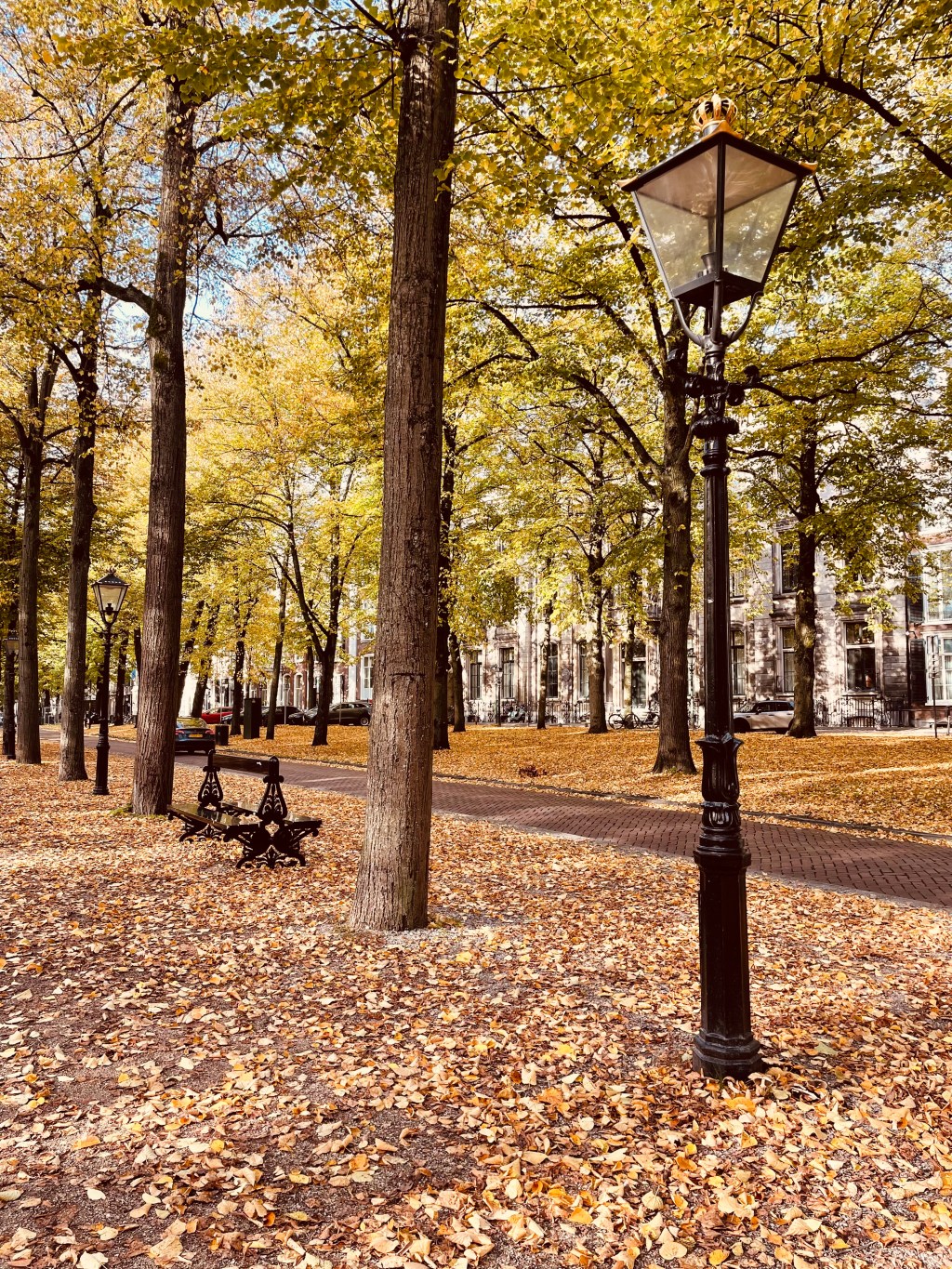
    I find this to be much harder in the touristic center of Amsterdam for example where masses of tourists taking pictures kind of ruins it for me. I also like to stroll along the big plane tree ally away from the Hotel des Indes, walking past the imposing buildings of embassies and consulates until you reach the summer residence palace on the other side of the street. 

    While the weather is often a big downer in The Netherlands, it is such a pretty place to visit, and I do recommend you pick the time wisely. While tulip season is of course amazingly beautiful, summer until about mid-September shouldn’t be overlooked at all. And if the weather is indeed terrible, there are plenty of stunning museums to be visited and coffees to be had.

    Traditional Dutch city scape

    In my opinion, being a tourist is not so much about checking things off a bucket list, or worse, a to do list. I think that the art of being a comfy tourist is to blend in with the locals and see those places that you wouldn’t otherwise experience. The center of the Hague is a very small and safe place to navigate. You can’t really get it wrong. So, try to venture about a bit and don’t just stop at the museum. 

  • Are you capable of truly doing nothing?

    Are you capable of truly doing nothing?

    Most of the time, I travel to explore. But summer holidays are just different. It is the only time of the year where the sole purpose of going somewhere is to do nothing. Nothing being defined as sleeping in, proceeding to the beach right after breakfast, staying at the beach until about 6 p.m., showering, getting ready for dinner and going to bed after chilling on the balcony for a few hours after dinner. It is perfect, but not easy.

    In my daily year-round routine, I get up at 5:24 a.m. (because the alarm goes off at 5:15 and I allow myself one snooze), I work out before a full day in the office followed by cooking and other household chores. I go to bed early and fill my weekends with more chores, longer gym sessions and sometimes travel. I am generally unable to sit still. I would always find something that needs to be done, and leisurely activities, such as reading a book happen very rarely when I am in my working mode.

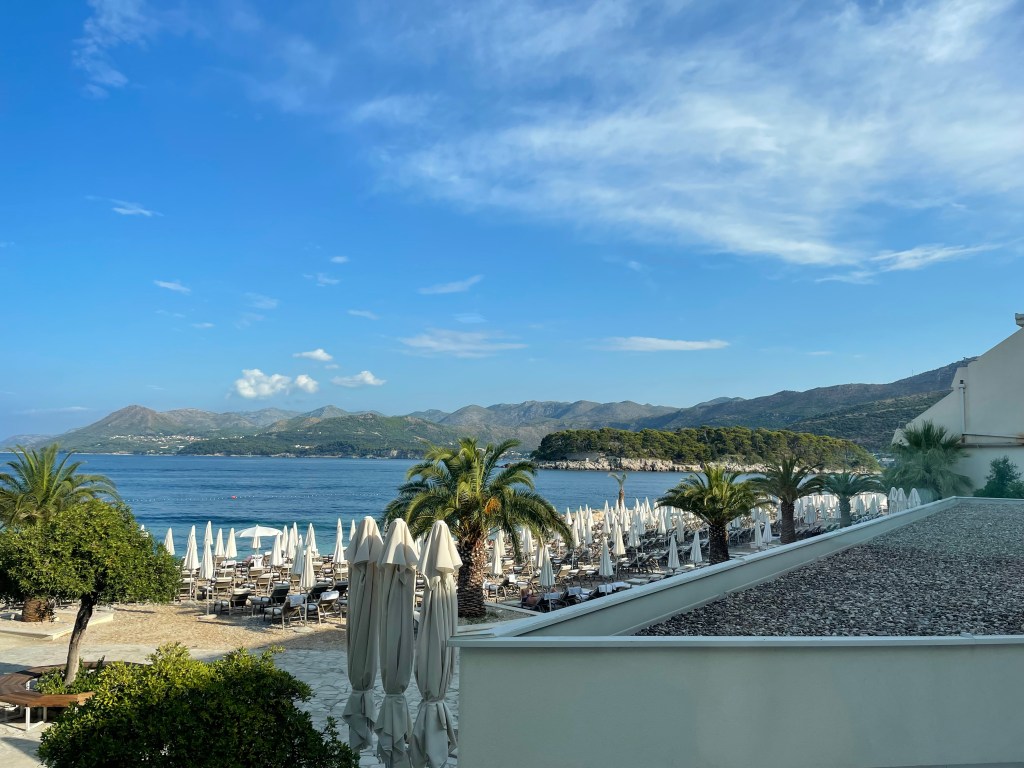
    It will usually take me a few days into my summer holiday to clam down and wind down to the point that I can actually pick up a book and just immerse myself into a story while glancing at the calming waves of the Adriatic or Mediterranean Sea. But doing so is just so very important. No massage, meditation or other procedure can bring me the same level of calm and wellbeing that 10 days by the sea can. The key here is to choose your hotel wisely (as always). For me, the most important aspect is the view. A hotel beach, which not only has its own sunbeds and umbrellas but also someone who moves those around for you for maximum shade and serves you iced coffee without you having to queue for it or schlepp around your wallet. You simply put it on the room and that’s it.

    Hotel beach on the Adriatic coast

    For my summer holiday, I like a larger hotel, so the ‘crowd’ you encounter is more diverse and you do not necessarily run into the same three couples at breakfast and in the beach bar where I would usually take a light lunch (because walking elsewhere does not fit into my lazy schedule). Ideally, my hotel would have a well-equipped gym, just so I can fit in two or three alibi workouts during this time, and a spa. Holidays are the time to really treat yourself and a good massage or facial can make a huge difference when combined with the dolce far niente lifestyle at the beach.

    sailing boat on the Adriatic at golden hour

    If you are in any way like me (and not spending beach time on your own for a change) lock your phone in the room safe. Don’t bring it to the beach. The world won’t end with you being unavailable for a couple of hours a day and, no, you do not need to check your email on vacation. If you really must, you can check it in the morning, at lunch and in the evening. Just give yourself a break for a few hours in between. Your brain will thank you for it.

    As for my beach side reads, I recommend something light and/or wholly unrelated to your everyday life or work. If you really want to relax, you should stay away from gruesome or overly depressing topics and intellectual depths. One good beach side read I remember was by Kamin Mohammadi – La bella figura

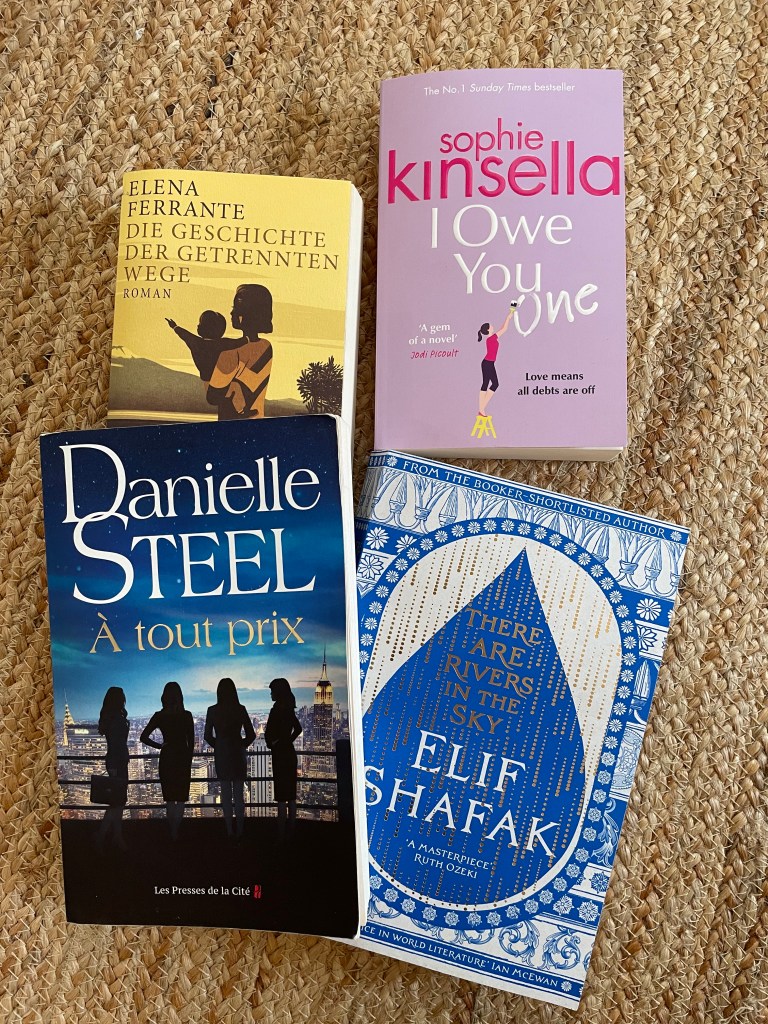
    This summer, I will bring Elif Shafak -There are rivers in the sky, as well as Sophie Kinsella – I owe you oneElena Ferrante – part 3 of the Napolitan Saga, Those who Leave and Those who StayI have read the first two parts of the Napolitan Saga in summers past and it is about time to carry on. Just in case I run out or don’t enjoy one of these books, I am also bringing along a novel by Danielle Steel – À tout prix I bought in France (mainly because it was printed in a decent font size and didn’t weigh 1.5 kg!) and started reading on my trip to Mallorca in June.

    Selection of colourful books

    If you are more into non-fiction, and use this relaxing and reflective time in a more targeted, self-improvement kind of way, I recommend the Mel Robbins – The Let Them Theory, which will give you plenty of food for thought but is also an easy enough read to turn the pages without too much reflection in between. 

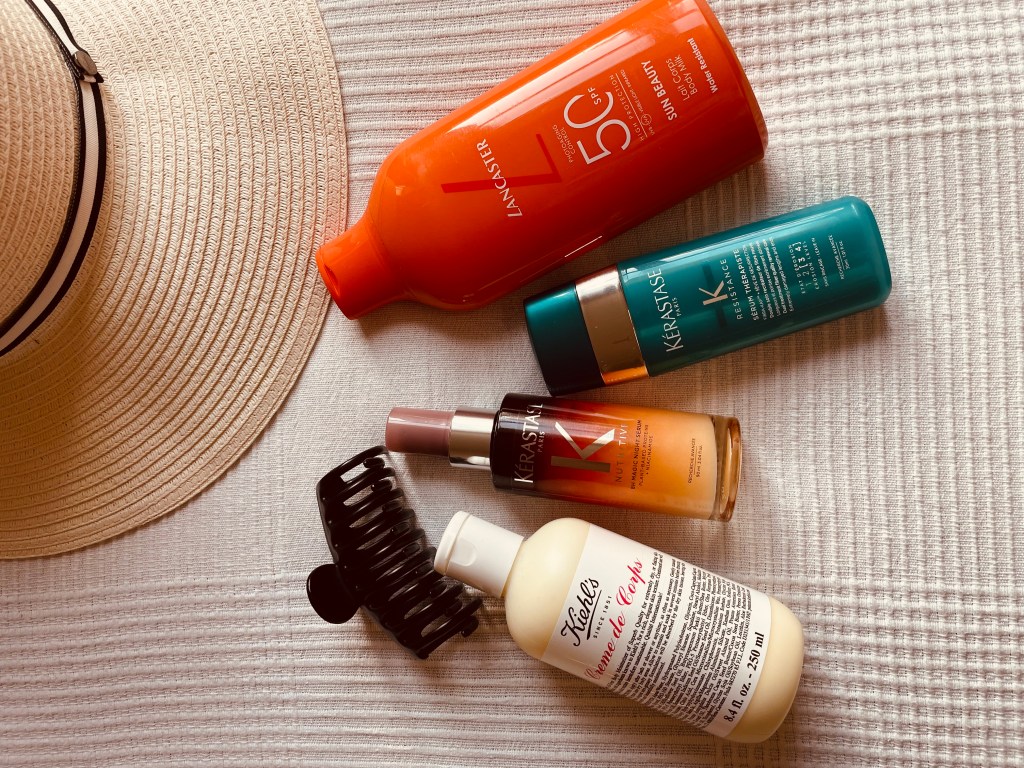
    Another topic, besides beach side reads that I am very passionate about when it comes to beach holidays is SPF. Don’t be the lobster on the beach and don’t be that person that starts applying sunscreen after they already got fried in the morning sun. A key rule on SPF is to apply it before you even get to the beach and to apply it everywhere on your body, face, and yes, your feet and ears. You can thank me later. Of course, you’ll need to re-apply but it is so important to get yourself covered from the very beginning, literally. My favourite SPFs are LancasterClarins, and Shiseido. While I adore the Dior face SPF 50 and use it on a daily basis all year around, I don’t find it suitable for the beach. In my opinion, it is an ‘urban SPF’. For the face, I would recommend Shiseido instead (I will buy mine at the airport).

    Straw hat and several high-end beauty products

    I would recommend bringing a good moisturising body lotion as well, as most hotel size lotions just don’t cut it (apart from not ever being enough). One of my favourites is the Kiehl’s Creme de Corps.

    As for hair care … well. First of all, you should bring and wear a hat. But, nevertheless, your hair, especially if it is treated, will need A LOT of tender loving care during this period. Personally, I swear by Kérastase Nutritive Night Serum (to be applied into your dry hair overnight) and the Résistance Thérapiste Stengthening Healing Serum, which you apply into your wet hair. The latter is my absolute beach favourite.

    I wish you a wonderful, relaxing and resetting time of doing absolutely nothing for a bit this summer!

  • Summer vacations – the queen of all vacations

    Summer vacations – the queen of all vacations

    Just as there exists a hierarchy of religious holidays with one or two being the holiest in a year, holidays follow a hierarchy in my world. The most important of them all is the summer holiday, which will traditionally fall into the month of August. And all other holidays will be arranged according to their importance: meeting friends before solo-trips dominated by shopping and sightseeing. I likewise feel that summer holidays are to be spent in company of your nearest and dearest and follow the religious holiday routine of sitting idle, going for long walks and dinners, drinking a glass of wine (I otherwise don’t really drink) and reflect upon the year that has passed. 

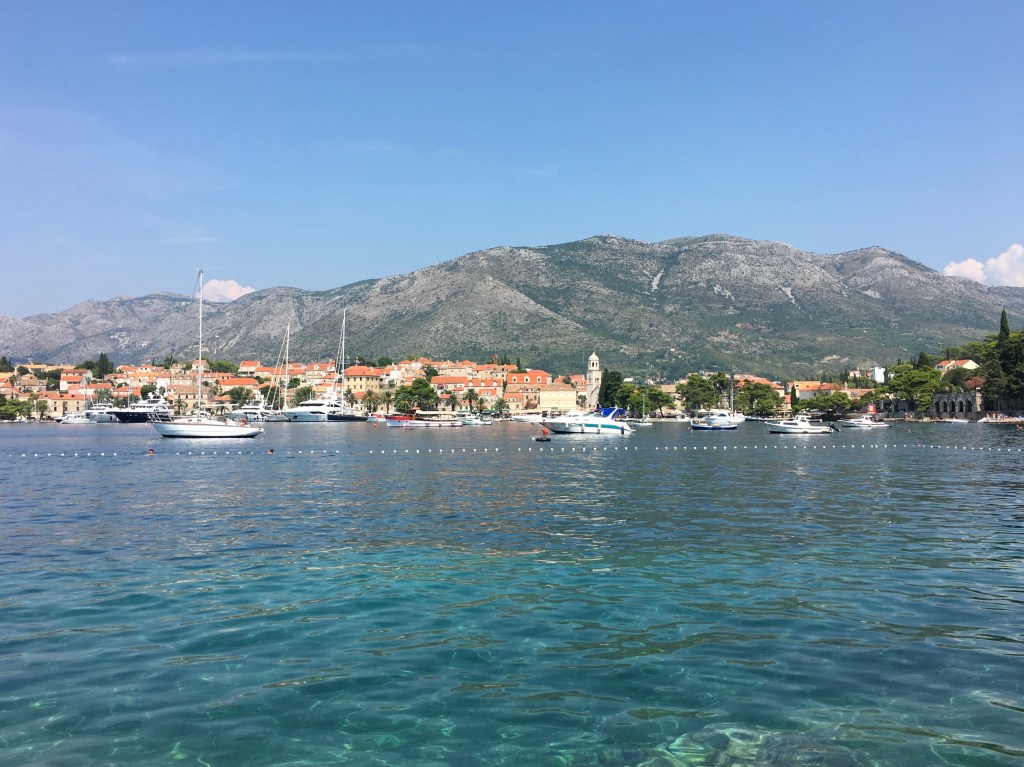
    view on Croatian village

    Similarly, spending your summer holiday alone feels like Covid-19 Christmas and New Year’s Eve 2020 stranded with a lower back hernia in addition to the worldwide travel ban. That being said, I managed to buy a bottle of champagne and even prepared a homemade tiramisu for New Years Eve 2020. You just got to make the most of every situation. 

    Nevertheless, I did spend a rather disappointing summer holiday in Crete last year. I felt lonely; very lonely. Traditionally, I would go to Croatia with a loved one (the South of France could be an acceptable alternative in my book) and do absolutely nothing besides swimming, tanning, and reading shallow books. Every July, I would feel how I was approaching the state of being holiday “ready” when deadlines keep on piling up, mistakes happen more than usual (please don’t mind my typos) and last-minute appointments need to be squeezed in before the northern hemisphere shuts down for a hard-to-navigate period of nearly two months. Last year things were different; illness and tragedy made it impossible to have a re-run of this most fabulous time of the year, but I knew that summer vacation is a must in my calendar. Without it, I will simply burn out. I cannot go twelve months without ever seeing the temperature rise above 30 degrees Celsius or feeling the sun on my skin for more than one day in a row. The first year after leaving the Middle East was the hardest for me. I just could not cope with the grey skies and the rain. And over the years, I have read in several self-improvement books and plagiarized Instagram quotes that “You cannot pour from an empty cup” and this is why I decided that in order to sustain my ability to support, I needed to take care of myself, and that meant eight days in Crete shabbating on the beach. 

    empty sunbed on the beach

    To be honest with you, I wanted to keep it as budget friendly as possible (apart from the airline because that is non-negotiable) because I also intended to squeeze in a weekend in Paris and seeing friends in London that year, and after all, it just wasn’t the real deal of what summer vacation should be. But guess what, that wasn’t a good idea.

    I can’t say the hotel was bad, but the location certainly wasn’t great (I am talking weathered shell constructions of bankrupt hotel projects and a powerplant next door, as well as a cinema complex with live music events next to my bedroom window). To make things worse, the airline cancelled my flight the evening before my 5 a.m. airport pick-up and re-booked me on a budget airline with a two-hour detour and a 5-hour airport break. It felt like taking the bus to Crete, with the springs in the seats reminding me of my 2020 hernia. Fittingly, there were plenty of crying babies and ladies fishing out egg salad sandwiches from enormous Tupperware. Of course, the airport pick-up in Crete had been lost (non-refundable, of course) and the new driver was a sleaze who could not get over the fact that I was travelling alone. Let’s just say: I regretted not following my own advice on location, comfort, and safety.

    The hotel itself was good, it was clean and modern and apart from the gross overstatement of what a “gym” meant (no, yoga classes do not count), it largely corresponded to what had been advertised when I made the booking. Dinner was included, and I did not have much to worry about. Apart from the fact that no one spoke to me. I cannot really tell you why, but the people in that hotel were the most uncommunicative bunch I have ever come across. I think I did not manage to talk to anymore for a full week, with the exception of the staff serving me coffee. 

    Not being able to strike up a conversation (not that I am a very chatty person by nature), really bothered me very much. People would also stare at me during breakfast and dinner and it just wasn’t very pleasant. The Germans would seize the same sunbeds around me every day, and still navigate avoiding eye contact at all costs.

    Sunset on Cretan beach

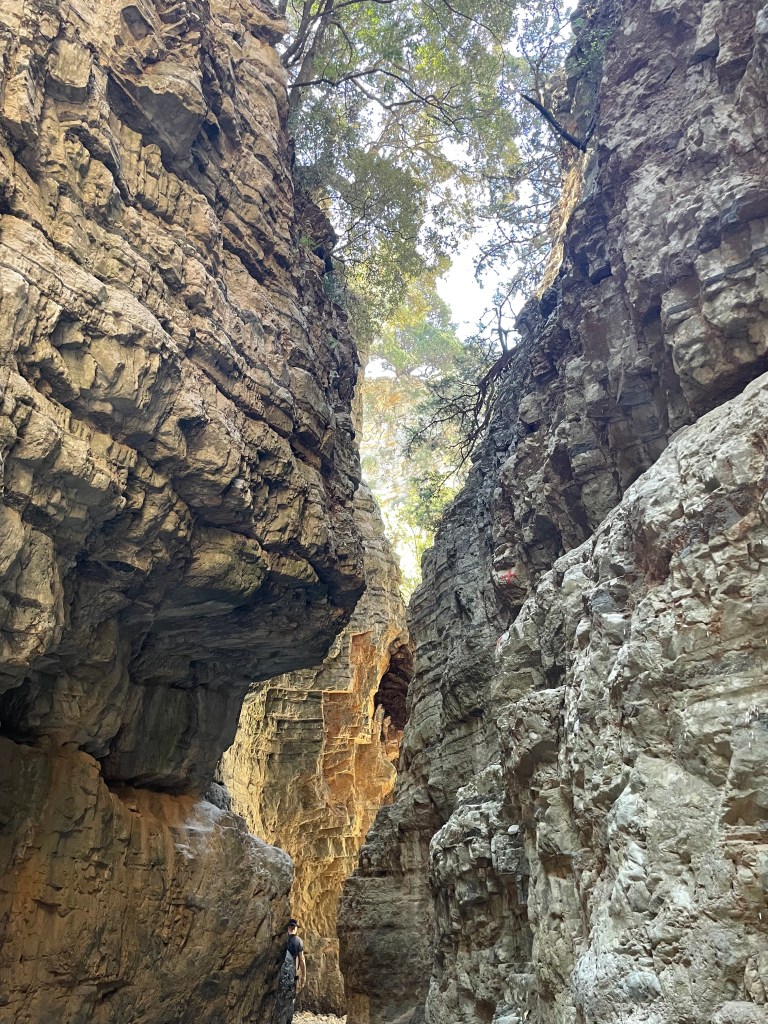
    During the day, I would do what I always do on a beach: sit in the shade, drink iced coffee, go for a swim and read a book. Unfortunately, I ran out of reading material within two days and all the left-over holiday literature were psychotic, depressing novels, or sci-fi trash. Before this vacation would eventually turn into a depressive slump, I decided to book a day excursion and thankfully that was the best idea I ever had. I went on a hike through one of the beautiful gorges of the island in – yes, the company of a bus full of people uninterested in talking to strangers. 

    view of gorge in Crete

    The Dutch family that happily accepted me taking photos of them did not even care to ask whether I wanted a photo of myself as well. However, I finally got to move (in inappropriate footwear – gym shoes do not make good hiking shoes) and see the Island, and its beauty was breathtaking. Since my not so fortunate hotel choice meant that I was the first pick-up after Heraklion, I actually got to see the entire island in one day and it was wonderful. 

    So why am I telling you all this? I guess, I just want to remind you how necessary it is to take a break and do something with someone that you truly, truly enjoy. Just like religious holidays and family gatherings, we need this dedicated time of the year to take a break, to recharge our batteries and reflect upon our goals, plans and intentions for the new ‘year’ ahead. In a way, I find summer vacation cathartic. It is necessary. But you need to get it right. You need to find a way that it will serve your needs in a way that it will give you strength. Crete wasn’t it for me and this is why I share this story. What is it that makes you happy? And this is what you need to do. Or at least overpack, bring a pair of hiking shoes and make an effort to talk to the solo traveller!

  • How coffee can ruin it all

    How coffee can ruin it all

    Have you ever stayed in a nice hotel but would never go back there because their breakfast coffee was just too bad? I have. And in fact, the coffee is a serious criterion for me when it comes to rating a hotel. 

    Shockingly, most of the places I would discount for future stays despite good locations and other good attributes for the simple reason that their coffee was undrinkable were located in heartland of coffee: Italy. A few years back, I travelled to Rome. I stayed in a four-star hotel that seriously only had a coffee machine, the kind of which you would find in a hospital lobby.

    It was truly shocking. However, it was not the only such place in Italy I came across. I also managed to find another four-star hotel in Milan that was similar in that regard (the one close to the hair salon I told you about two weeks ago). The hotel was actually very nice, had a great location and nice staff, but I just could not get over the coffee. For me, my morning coffee is the most important event of the day. It is non-negotiable, and it needs to be a good, strong, flavoursome latte or cappuccino; and from a four-star hotel that charges a couple of dozens of Euros for breakfast, I also expect excellent foam on a barista-made coffee and not something I have to get out of a 1990s machine. Call me high-maintenance, but I really cannot accept that. It’s not like I am asking for champagne. 

    cappuccino in a posh cup on a marble table

    Another coffee-related ‘won’t go there again’ criterion I apply to hotels is the in-room coffee situation. 

    Don’t get me wrong, back in the day when I could barely afford a 3-star hotel or bed and breakfast, I was very happy if there was a clean kettle and a few sachets of Nescafé (or the local spin-off) in the room. It is completely fine and acceptable for that category of hotel and at least it woke me up. What I do not find acceptable though is when you are staying at a higher category place and you cannot even make yourself an espresso in the room. After all, you should get what you pay for.

    Recently, I stayed in a four-star hotel in Mallorca – with a 5-star price minus the service – that offered exactly that. A kettle and an IKEA mug (the kind you find abandoned in the office kitchen) with one sachet of local Nes and no spoon to stir it in sight. I honestly could not believe it. Worse yet, when I checked out after having had my “big breakfast” as they called it, the lady honestly told me: “I see you had one additional coffee for breakfast [Yes, I tend to drink two, especially when there’s none in the room] … But it’s OK, I’ll gift it to you.” I was gobsmacked. I literally paid an arm and a leg for the night and here she was counting my coffees. It wasn’t the lack of service, the ineffective aircon, lack of toiletries or sub-par restaurant recommendations that got me about this hotel; no, it was the coffee remark that immediately made me think: Bye-bye, hotel, you will never see me again. 

    During that stay in Spain, I moved to another hotel the next day. Initially, because I had had a change in dates for my trip, but also because the first hotel I stayed at was just terribly overpriced. The second hotel wasn’t much better when it came to their coffee-rating. There was no facility, not even a kettle in the room and the breakfast coffee (yes, from the infamous hospital lobby machine) was so undrinkable (thin and sweet somehow and that’s your black coffee with no added sugar button) that I will not choose this hotel next time I go. It’s a shame, because many other aspects of it were actually good. 

    Isn’t it the simple things like that, or at least things I believe could be very simple that make or break a hotel stay for you? I really do not understand why so little attention is paid to this aspect of hospitality, especially in countries with an excellent coffee culture. For me, great coffee can easily take a hotel from 6 out of 10 to 10 out of 10 points and the bad coffee can do the exact opposite. In fact, it is so important to me that when I started upgrading the kind of accommodation I would stay at, I would check whether the hotel had an in-room coffee machine running on capsules and save on breakfast altogether, bringing a pack of oatmeal to get me going in the morning and shaving off a good 30€+ a night from the grand total. Just the coffee was the non-negotiable part in it. In most European cities you would anyway want to try the local bakeries and buy a croissant for less than a tenth of the breakfast charge while being happily caffeinated. It was the best deal for me at the time and one that allowed me to go to nicer hotels when my budget was tight. 

    As my employment situation improved and travel budgets grew out of the student years, I have become a huge fan of hotel breakfasts. They can really make you feel like you are truly on a holiday, but coffee still plays the biggest role in them for me.

    And while you cannot know the coffee situation in the breakfast room before you book, you can scan the pictures and read the small print to find out whether there’s at least a machine in the room that will take you from sleepy to happy in the morning! Just don’t over-do it. You might be allowed only one 🙂

  • It’s all about the location

    It’s all about the location

    Location is everything. It does not mean that you need to have a direct view on a sparkling Eiffel-tower. Or not necessarily. No, when I say location is everything, I am talking about a lot of different factors that make a hotel right for me. Location is what makes your stay comfortable in a way that serves you, your needs and the occasion. Christmas 2019 I spent in Athens with only one part of my family, as the other part could not make it to Europe that year. I went for the Acropolis view and proximity to the main cathedral and city centre, because it made sense for the occasion. 

    breakfast view on the acropolis

    But, last winter, for instance, I took my mum on a trip to Istanbul, as it is her favourite city and she had just completed a serious milestone in her life that needed to be celebrated in style. I chose a beautiful, luxurious hotel with all the amenities we wanted. The room was spacious (with the twin beds at a nice far distance of each other! Not a given unfortunately!), the coffee was amazing and the food wonderful. The hotel had different restaurants, a fantastic gym and an indoor pool. Yet, the location was a disaster. Not because the view was bad or anything like that, but because it was so awkwardly located next to several highways looping up the hill, that there was no way it could safely or comfortably be reached on foot from the riverbank that was only a stone throw away. We were entirely dependent on taxis, which unfortunately sometimes proved to be more stressful than I like to recall, with most drivers unable to understand and speak English and one driver, after I had shown him the hotel address on a hotel business card about 3 times already, taking us down the highway to God knows where. It was a very scary moment, especially when you find yourself at the mercy of that driver who you cannot even communicate with. We were able to get him to turn around and eventually made it back to the hotel, but I would have preferred to skip this experience in my life. The take-away of that story for me was that I completely failed at choosing a good location and it won’t happen to me again.

    Rainy day view on the Bosphorus

    Similarly taxi-related a.k.a. avoiding to have to sit in the car of a stranger is how I like to choose hotels in big cities now (through lots of trial and error). And this is why I want to share these tips with you. Some cities, such as Milan or London have an excellent tube or rail connection to the airport that will relieve you from having to be stuck in a taxi (and traffic) at an exorbitant price when you can just as well take the tube. In Paris, I can also recommend that when it comes to arrivals by train (Gare du Nord, for example); personally, I am not a big fan of the rail connection to Charles de Gaulle airport and try to avoid it where possible. 

    Istanbul  mosque and taxi

    The key here is to choose your hotel location wisely, based on the metro lines. What you want to avoid is to have to schlepp your suitcase through different line-changes. It will not be comfortable and you won’t get there looking cute but rather like a sweaty mess, which is not a look I recommend going for under any circumstance. You’ll have to keep it basic. One line, no changes or a maximum of one change.

    This works exceptionally well for me in MilanLondon and Paris. It obviously does not work if you bring more than one big suitcase. 

    manicured hand holding Longchamp bag and suitcase

    Another question you have to ask yourself is what you value most (unless you don’t need to look at price tags and can stay at the Ritz or Plaza Athene). Do you need a Duomo view in Milan or would you rather have a spacious room? Some years back, I travelled on a rather tight budget but was able to find a really good deal on a room of a four star hotel chain located somewhat far from the city centre. However, the same budget would have only gotten me something truly awful closer to the centre. So, I chose the far-out location instead.

    There was a direct tram to the Duomo, and it was the beginning of September which meant the days were still reasonably long and I felt safe travelling by tram in the evening. Since I had no shopping budget, I also did not have the issue of having to leave things or bags at the hotel throughout the day. It was a wonderful choice. I saw so much of the city simply by way of the tram ride. I also enjoyed a beautiful, huge room, a fantastic hotel gym (not easy to find, I am telling you) and all the amenities of a good hotel normally out of my price league. It was great. 

    So next time you book, ask yourself what it is you value the most and start your search accordingly. If money isn’t an issue, go for it and get that Duomo view and a private car pick-up from the hotel, but if you enjoy luxury more than your wallet allows (like myself), you got to start somewhere and make smarter choices in getting the most out of what you can afford. And sometimes, it is truly not only about the money. For me, it has a lot to do with my peace of mind and I would take the tube/subway/metro ten times over having to sit in a car alone with a stranger. 

    It took a few years and trips, but for Milan, I have now found my perfect match: The Radisson Collection hotel in Santa Sofia with direct metro access (M4) to Linate airport in the front of the hotel, excellent breakfast and coffee, a reasonable gym, very kind and friendly staff, and located not too far from the Duomo (with a direct tram).

    Rainy view on Santa Sofia metro station Milan

    In London, I like to stay at the Royal Garden Hotel on Kensington High Street, as it is well connected to everywhere, including the airport, and right on the edge of beautiful Hyde Park where I like to recall my student days going for a morning run.

    None of my recommendations are sponsored. They come from the heart and are the result of lots of trial and error.

  • The art of dining alone 

    The art of dining alone 

    Chapter 2: Getting started

    If you have followed my blog and read chapter 1 published the week before last you will have understood that for many years of travelling, I did not muster up the courage to go and dine out alone. I felt judged, stared at, or worse even: pitied. 

    Don’t get me wrong, at times these feelings still creep up depending on the environment I find myself in, but in general I have learned to just let other people mind their own business while I mind my own.

    And this brings me to what I want to reflect upon today. In my opinion, the environment and circumstances in which you find yourself matter very much. For instance, I find urban dining much easier than say beach location dining. Of course, this is not a hard and fast rule, but I am just speaking about my own experiences here anyway. I have come to this particular realization after some not-so pleasant meals by the beach during summer vacations. To me, being in a more urban environment makes it easier, as dining is more of an everyday business affair rather than an event in itself which it often is when people take a break by the sea. I think by now, I have a few tips to share about how I managed to transition from in-room meals to venturing out and eating in a restaurant by myself. 

    If you are struggling with this situation, too, I think you need to start out easy and make it as comfortable as possible for yourself. My advice would be to start with eating in the hotel restaurant where you are staying. In my opinion, it is the easiest kind of “situation” because you don’t need to take transport, and chances are there are other solo diners owing to the simple fact that hotels have business travellers. 

    I had very good experiences at various hotels I have stayed at, but on the top of my head I can think of hotel Alfred Sommier in Paris and the Fairmont hotel in Amman, Jordan. The latter has an excellent steakhouse and a Lebanese restaurant.

    Sure, going down for dinner isn’t much of a move, but this is the entire point. It will be a good starting point and much better than sitting in your room eating in front of the TV in your PJs.

    Level 2 would be to stay local and try a bistro or restaurant close by the hotel. Usually, these places – in Paris for instance – are lunch and dinner places and very unfussed. If you are travelling in summer, most of them will have a terasse or a few tables out in front, where you can engage in some Parisian-style people watching, which is a wonderful way to make dinner for one more entertaining.

    evening sun hitting on a typical Parisian bistro table

    I can recommend a few bistros close to the Champs de Mars in Paris, such as le Café Picquet on Avenue de la Motte Picquet or Le Pierrot for that purpose, but generally speaking, there are so many similar ones in Paris – just give it a try. I only mention these here because I have been there, tried them, and liked them, not because they are particularly fancy, special or outstanding. Sitting on a terasse facing the street is in my opinion a perfect setting for a solo-dinner. 

    view of a hearty meal at Yum Schwarzen Kameel

    In the same vein I can recommend Zum Schwarzen Kameel in Vienna centre, which is a bar, bistro, restaurant with a rich tradition and equally a place for apéritif. It is basically open all day and has a beautiful outdoor sitting area in front.

    You can go for breakfast, lunch or dinner as it is always busy and popular. Maybe you want to start with an afternoon drink and transition into dinner. I have been there on different occasions and it is very popular with the locals for after work drinks. You may have to queue for a bit, but to me that is just a sign of excellent quality.

    Vienna is a safe and beautiful place to stroll, and I really urge you to explore the local options when you are there, and not just for cakes!

    Another way of easing yourself into the habit of dining out alone is going to a mall. In Dubai for example, I have had great dinners in some of the many restaurants in the mall where you just join one of the other shoppers stopping for a bite. There are way too many options to list here, but one place I find very easy (no matter where) is the Japanese chain Wagamama, which is also a great option for London, Amsterdam or Copenhagen. 

    It can of course be daunting and boring to eat on your own, but I really think that it is an act of self-respect to put on some nice clothes and get yourself out there to partake in adult life instead of hiding in the room. 

  • Dear hotel, what is with the hair-dryer?

    Dear hotel, what is with the hair-dryer?

    Unfortunately, my day job has not really elevated me to the level where I can stay in hotels that offer a top-notch hair styling device in their rooms. And even more unfortunately, it appears that even if your budget isn’t too humble, you are nevertheless perpetually suspected of stealing a hairdryer, because why else would most hotels still use these apparatuses that are attached to the wall? Whenever I see one of these, I am stunned. I thought we had out-grown the 80s. I mean, I might as well put my hair into an air-fryer. The other very popular variant is the slightly more advanced model with its unreasonably short and not very bendable cord that literally weighs 5 kg. Although I am into weightlifting, I don’t feel like that one-sided expander-style overhead hold for 30 minutes, because this is literally how long it will take to get my hair to the state of being dry. And the frizz will be real. 

    View of Valera hair dryer

    I have been wondering again and again, why it is that hardly any hotel I have ever stayed at had a semi-decent hair dryer. Do people really steal them? And don’t even get me started on the shampoos and conditioners. It really strikes me as a serious conundrum. The same is true for gyms actually. Why do gyms and hotels inherently suspect their clients and customers of kleptomania? And who advises these people? Let me tell you, I would be a much happier guest if I could wake up with good hair.

    The consequence, of course, is that I stopped travelling light. I just do not appreciate a bad hair day. I always have to bring half a salon to get my dry, coarse and wavy hair (of which I have a lot) into somewhat of a shape. In some places, like Serbia for example, your best solution is of course to just go to a salon and get a blow-out. But in most western European cities and capitals that is just not a thing. I did it once in Milan and was incredibly happy with the result. I was actually just killing time until my room was ready and walked past a random salon in the neighbourhood. Getting a blow-out seemed like a perfect use of my time. So, one piece of advice would be to just go to a salon, but otherwise, just over-pack for your weekend trip like I do. 

    In fact, going to a hair salon in a foreign country or city is really enjoyable. I think these kinds of non-touristic everyday places really tell you a lot about the culture and people. The way people treat and blow-dry your hair really tells you so much about a culture and beauty standards in that country – something I find inherently intriguing. I loved my Italian blow-out, but nothing will ever come close to Belgrade, the capital of hair. You can walk into any salon and you will walk out looking like a Hollywood star getting ready for her red-carpet event. And it will just be a regular Saturday, because this is just how Belgrade rolls.

    I also had some good hair moments in Jerusalem, however, they cost as much as a six-month subscription to a Serbian salon. 

    So, now when I travel (to anywhere other than Belgrade) – and very often these are long-weekends – I simply have to overpack just to accommodate my hair essentials. Over the years, I have, however, perfected the art of ‘what to bring’ and usually confine myself to my trusted hair straightener, and my own shampoo and conditioner and/or mask that can be used as a conditioner in a travel size package (check out my packing essentials reel on Instagram If you like). The latter is an absolute must, because I think unless you are able to afford the Ritz, you’ll likely be stuck with a 2 in 1 designed for male business travelers with thinning hairlines. And the straightener can usually fix the mess the sub-par hairdryers create.

    Better yet though: next time you travel, just walk into a salon and ask for a blow-out. I guarantee you, you will love it!